Wednesday, April 22, 2015

Earth Day Projects


To celebrate Earth Day and to invest our minds in learning about vital issues facing our planet, you will be researching several ecological issues; you'll summarize your findings with  co-lab presentations. 


You must cover the following in your presentations:

1.  Teach us about alternative energy
    1. What are the options?  Describe each of the types of alternative energy
    2. Why are these energy options better than fossil fuels?
http://www.eia.gov/kids/energy.cfm?page=kiddie_resources
http://www.alliantenergykids.com/energyandtheenvironment/renewableenergy/

2.  Teach us about climate change
    1. What's causing it?
    2. What are the effects?
    3. Why do some people argue that climate change is not real?  Can we prove it's really happening (yes)?  How?
    4. What can we do now?
 http://www.epa.gov/climatechange/basics/
http://www.epa.gov/climatechange/students/basics/index.html
 http://www.eschooltoday.com/climate-change/Introduction-to-climate-change-for-children.html


3.  Teach us about toxins in:

    4.  Teach us about recycling:


    Monday, April 6, 2015

    Friday, April 3, 2015

    You will be creating co-lab presentations that help explain the forces that change earth's surface.  There are not as many great links to direct you to for this research, but we do have really good textbooks and you can draw any any information from the Interactive Read Aloud I am doing as well as the videos we will watch.

    You need to cover the following in your presentations:
    1.  What are the three primary forces that change earth's surface?
      1. Teach us about earthquakes and volcanoes
        1. Tectonic plates
        2. Faults
        3. How are earthquakes measured?
      2. Teach us about glaciers
        1. What percentage of the world is currently covered by glaciers?
          1. What impact does global warming have?
        2. How do glaciers move?
      3. Teach us about weathering and erosion
        1. Teach us about chemical and physical weathering
        2. What is soil?
        3. Teach us about erosion
        4. Teach us about deposition
        5. Landforms caused by erosion and weathering

     
    Tectonics:

    Volcanoes:

    Faults

    Glaciers

    Erosion:

    Soil Deposition:


    Other helpful links:


    http://pubs.usgs.gov/gip/dynamic/Vigil.html
    http://www.geography4kids.com/files/earth_intro.html
    http://www.geography4kids.com/files/earth_rocktypes.html
    http://www.geography4kids.com/files/earth_tectonics.html
    http://johomaps.com/world/worldtecton.html

    Tuesday, March 17, 2015

    "Assimilation" (Forcing Others to Be the Same as You) and Native Identity Research


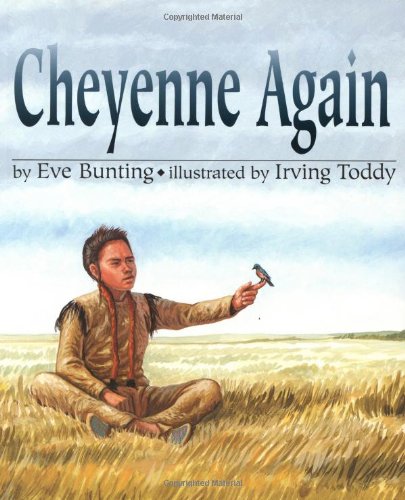
    In this text, a young Cheyenne boy, Young Bull, is forcibly escorted away from the color, life, and happiness of his family to be "educated" and "cleaned" of his Native culture.  Instead of living in a tepee, he lives in a sterile barracks and attends a school that more closely resembles a boot camp.  "No more Cheyenne" the whites say as they take his buckskin and cut his braids.  An imposing sign hangs in the workroom, "speak English!" condemning any use of Native languages. His white instructors say, "You have lost nothing of value.  You will be like us."  The clear implication is that they don't view Native American culture as having any value.  To be valuable, they say, you must be white.

    As Young Bull listens to history told by the victors, his people's bravery at Battle of the Little Bighorn and other important events are lost.  Finally, he tries to run away but is tracked down like an animal and punished by being locked up with a ball and chain.

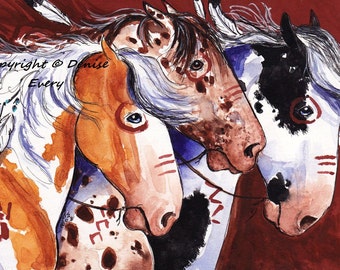
        One teacher, however, voices  empathy for Young Bull, telling him, "Never forget that you are an Indian inside.  Don't let us take your memories."  Young Bull complies, drawing pictures of Cheyenne war ponies in his lined notebook.  He imagines himself cutting these lines which, like prison wires, bind him.  He imagines himself Cheyenne again.


    Because many cultural problems occur simply because we are unaware of the past, I now want you to do the Cheyenne culture the justice that we once denied it's own citizens.  I want you to learn a little about the tribe's history.


    These are the most valuable websites for looking at Indian boarding schools:  http://www.pbs.org/indiancountry/history/boarding.html
    https://content.lib.washington.edu/aipnw/marr.html

    (Note: there are not a lot of websites describing this, and the two above are the best.  Do your best to read them and feel free to bring in information from Cheyenne Again.  Some of the language on these websites is kind of advanced, but just draw out the things that you think are most important. )

    Part A: Create at least 5 slides on CoLab that describe what boarding schools were like.  You might choose to answer why these schools were created, how the Indians (imprisoned) there changed over time, what they may have lost, etc.  Definitely look through the pbs.org website included above, but you can also do other research on Indian boarding schools.  In addition to writing text, you're welcome/ encouraged to find before and after pictures like I use above to help illustrate your points.  Some other good sites might be:
    http://www.english.illinois.edu/maps/poets/a_f/erdrich/boarding/gallery.htm
    https://www.youtube.com/watch?v=L6PU7eNrJnE&app=desktop


    Part B: In addition to describing life on an Indian boarding school, you should also pick a Native American tribe to research.  These websites are easier for elementary readers than the ones you worked with above.  Do at least 5-10 slides for your tribe.  Identify the tribe you're researching, talk about their culture, what they ate, where they lived, some of their ancient legends, what sort of houses they built, etc.  If you choose the Cheyenne, the links below are good:
    http://www.bigorrin.org/cheyenne_kids.htm
    http://www.native-languages.org/cheyenne_animals.htm
    http://nativeamericans.mrdonn.org/plains/cheyenne.html


     Some other important tribes might be the Navajo, the Iroquois, the Nez Perce, the Sioux (Lakota), the Cherokee, or the Seminole.  If you click on this link, you can find these tribes and others:
    http://nativeamericans.mrdonn.org/index.html


    Because I want to give you lots of freedom and see where your interest leads you, you may also research Australian Aborigine culture.  These links are good.
    http://panique.com.au/trishansoz/aborigine/aborigin.html
    http://www.encyclopedia.com/topic/Aboriginal_Australians.aspx
    http://www.factmonster.com/spot/aboriginal1.html

    Have fun!


    Wednesday, February 25, 2015

    Ecosystems Research Project


    Ecosystem Research Project


    General Guidelines:
    ·      You will create either a nonfiction book or power point presentation in which your research will be displayed. There will be a page for each ecosystem.
    ·      You will be collecting information about the following ecosystems: Forest (coniferous/deciduous), Rainforest, Oceans, Rivers, Ponds/Lakes, Salt Marsh/Estuary, Grassland, Desert, Tundra
    ·      You will use the ecosystem research project note sheets provided to record your information and will turn these in as part of your grade.
    ·      Your book must include all required information requested on the notes sheet, including pictures.
    ·      You will be graded using the rubric attached to this packet.  See each category for specific details.
    ·     You must hand in this packet along with your completed project.
    ·      You will be given enough time in school to finish this project. However, if you don’t use your time wisely, you will need to take this project home to complete.

    Suggested Websites:

    Other Helpful Websites
    Estuaries/Salt Marshes:
    Oceans:
                
    Lakes/Ponds:

    Grasslands:
                  
     Forests: